Google
 

Tuesday, April 3, 2012

How To Bonsai - The Secrets To Success

Story by: Andrew Perry
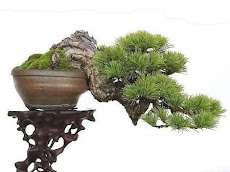
Photo by: The Best Garden Design

Ever consider the art of bonsai. Bonsai are not the trees themselves but refer specifically to the process by which to grow and care for the trees. Bonsai is an ancient art, first believed practiced by the Chinese, who shaped their trees into animal forms and then later modified and some say improved by the Japanese.

Bonsai trees are beautiful when grow properly and can make
anyone's garden the envy of friends and neighbors. You will
gain many skills when taking up Bonsai. You will learn new plant
knowledge, pruning skills as well as feeding and caring skills
Bonsai definitely had its rewards but if you are considering this
or have already purchased your first tree then you should pay
close attention to the advice given in this article. In it will be
some advice for the Bonsai Beginner.

The first piece of advice for the Bonsai beginner is to think this
through very carefully before you go out and buy a forest of
trees. Bonsai can be very rewarding but also very frustrating.
You should first consider the amount of time you have to
devote.

No one is saying that if you work full time you cannot raise
Bonsai. You will have to consider your work commitments, other
interests and see if you can balance everything and still devote
time to your trees. You also need to consider what to do with
the trees when you go on vacation. Just like having a pet.

The next piece of advice for the Bonsai beginner is to know
your own personality. Specifically when it comes to patience
and perseverance. Bonsai are delicate and they do die quite
easily. You may find that your tree is doing fine then all of a
sudden it takes a turn for the worse. This type of thing
happens and you must not let it deter you from trying again.

Sometimes Bonsai seem to die for no apparent reason. You may
have done everything possible to save it and it doesn't help.
This doesn't mean you are the kiss of death. It could mean the
tree had something complex or you just need to practice. By all
means try again. You will eventually get it and reap the
rewards. Learn what killed your tree and take that knowledge
to the next one.

The third piece of advice for the Bonsai beginner is to check
that you have adequate space. These trees do not grow very
fast so unless you live in a shoe box you more than likely have
space for one.. If you want to keep your trees outside then
make sure there are some cool and shady spots to move your
trees into during periods of intense sun or hot dry weather. You
may also want a covered area for periods of heavy rain.

Don't be fooled by the size and delicate nature of these trees.
There is no reason they cannot be kept outside and most
species of Bonsai do better in an outdoor environment. For
indoor plants make sure you have a fairly large window or a
balcony. Bonsai need light to survive. Be careful not to place
them to close to the window as sunlight passing through glass
is intensified. This will bake your Bonsai.

A forth piece of advice for the Bonsai beginner is to know the
species of your tree. Contrary to popular belief, Bonsai is not a
species of tree but the art. There are many types of Bonsai
trees. Some are deciduous and some are conifers. Knowing you
tree species is vital because you care instructions will vary
according to this. Remember, they are delicate so one mistake
in the care instructions and it could be curtains for your Bonsai.

A final piece of advice for the Bonsai beginner is to start small.
Best to start with one or two trees than a whole forest. Bonsai
trees are not exactly cheap so until you become familiar with
how much care they need keep it simple. It will be easier to
cope, both emotionally and financially from the death of one
Bonsai rather than 12. Hopefully these pieces of advice will
prove helpful to you and your new endeavor. Remember, if at
first you don't succeed then try, try again.

Andrew Perry makes it easy for anyone to grow beautiful, healthy bonsai using the "7 Bonsai Success Secrets". To receive your 6 part bonsai mini course visit:
http://www.easybonsaigarden.com
About the Author

Andrew Perry has spent the last 10 years perfecting the simple bonsai success secrets. Andrew makes the art of bonsai easy and fun for everyone regardless of experience. http://www.easybonsaigarden.com

Friday, September 23, 2011

Understanding With regards to Bonsai Wiring


Story By: lesley85

Bonsai Wiring and its Worth

The style as well as individuality of a bonsai tree will lie upon the creativity and design utilized on it. Bonsai wiring is a really popular technique in putting style in the dwarf plant. It gives shape as well as extraordinary beauty for the bonsai tree since it grows up.

Bonsai wiring is practiced by means of wrapping a wire all around the branches of the tree. This would employ force to the bonsai's branches that will actually encourage bending and also repositioning of its framework. The wire utilized should have required thickness that will put in good pressure in order to manipulate and also reposition the twigs effectually, as well as could still look clean. Bonsai wiring can be a remarkable help to shape your bonsai tree yet you need to be careful and well-informed enough to perform wiring mainly because it could potentially cause injury to the twigs.

Mandatory supplies for wiring a bonsai

There are 2 kinds of wires appropriate just for bonsai wiring. Anodized aluminum is suited to novices in plant growing since it is more pliable compared to copper wire as well as it could be repositioned quickly. It's not hard to adjust, and also it might cause much less injury to the twigs of the bonsai tree. Additionally , it is put to use by competent bonsai plant cultivators intended for framing thin-barked trees. Annealed copper wire is intended for advance or perhaps skilled bonsai plant propagators. It is very hard to make use of and shape. Yet annealed copper wire is best for hard twigs that are very hard to shape as they are much more stiff as well as resistant to twisting. This type of wire is 3 times tougher compared to anodized aluminum.

You can actually make use of raffia to safeguard the twigs of your bonsai plant from possible harms when using wires to shape your bonsai plant. You simply have to wrap it all around the twigs, and then you may proceed to wrap the wire all around the twigs.

Right period meant for bonsai wiring

You must think of the time of year of the year in bonsai wiring. For the period of spring or perhaps summer, bonsai twigs that are wired mature rapidly and also you are able to attain the desired form to your bonsai plant in just two to three weeks time. If you carry out bonsai wiring on fall or winter, it will take several months to reach the form you prefer to your bonsai tree. The type of bonsai tree species should also be considered since there are rapid growing trees which need considerably less time to attain the form you made. Fast growing trees normally include Elm and also Maple.

You ought to carry out routine assessments on your bonsai wiring to avoid ugly deformations on the twigs of your bonsai plant particularly whenever you utilized the wire in the time of peak growing period. It is best to perform bonsai wiring on fall or even wintertime to prevent enhancement of ugly scars on its branches.

The Correct Ways of Bonsai Wiring

You will need to have sufficient understanding of the right methods on how to carry out bonsai wiring. There are 2 wiring methods, that are double wiring and single wiring which could be very helpful to you while you try to shape your bonsai tree. You've got to use a wire that is about 1/3 thick of the bonsai twig where you will wrap the wire.

Double wiring is applied for wiring two branches with the same thickness and also if they're close to each other. You will only make use of one piece of wire in undertaking double wiring. Very first thing you'll need to undertake is to select two branches which are in close proximity to each other with a similar thickness. Before wiring both branches, you ought to begin wiring at the trunk at least once to secure the wiring. Subsequently, slice an estimated length of the wire that could be being used in wiring the trunk and twigs of the bonsai. Start the wiring over the trunk and then wire the first branch from the bottom of the branch to the tip. You should keep a common interval between the wiring spaces and make sure that the angle of inclination is 45°. This can allow the tree to evolve while keeping its new structure. And then, wire the second branch with the same tips. Accomplish bending of twigs after you have completed all wrapping of wires to the branches of the bonsai. If you wish to curve downward a branch, it is best to see to it that the wire is anchored below, as well as if you wish to flex the twig upwards then you really should have secured the wire at the upper part. After you've executed double wiring to all branches which have pairs, you'll be able to now carry out single wiring to the remaining single branches.

Single wiring is pertinent for wiring single branches. Initially, you have to trim the approximated length of the wire. Subsequently, secure the wire at least 2 times to the trunk with an angle of 45 degrees and start out wiring the single twig. When several wires are wrapped around the same part of the trunk, you should guarantee that it appears tidy. Then, carry on wiring the remaining single twigs of the bonsai tree.

About the Author

Preston Blackmore is an organic gardening and farming enthusiast.

Article Directory Source: http://www.articlerich.com/profile/lesley85/141577

Monday, May 9, 2011

3 Popular Flowering Bonsai

Story By: Ruth Morgan


Many people admire flowering bonsai. The combination of the brilliant colours of the flowers and the miniature size of the tree create a spectacular flowering bonsai.


There are lots of species of flowering bonsai. They include Satsuki Azalea, Cotoneaster, Winter Jasmine, Crab Apple, Flowering Cherry, White and Red Hawthorn, Japanese Flowering Apricot, Wisteria, Serissa, Firethorn, Deciduous Holly, Quince and Pomegranate. Some are suitable for the outdoors whilst others can be kept indoors. They all produce different displays and are very much valued as bonsai. Details about 3 of the most popular are given below.


1. Satsuki Azalea (Rhododendron indium) produces magnificent displays of flowers in late spring / early summer. This explains the origin of the satsuki name (meaning fifth moon in Japanese - corresponding to the time of flowering in June). It is possible for the same tree to produce flowers with different colours and different markings.


These colourful azaleas have been grown by the Japanese for over 300 years. A tip for buying Satsuki Azaleas is to do so during the flowering season when you can see the splendour of the colours. Azaleas are best kept in semi-shade outdoors. During the winter they should be protected from wind and frost. It is important to use lime-free soil and to remove dead flowers quickly.


2. Another favourite flowering bonsai is Crab Apple (Malus species). Many varieties are available which produce wonderful fragrant flowers of different colours in spring. There is a range of colours - from cerise to pink to cream to white. The small autumnal fruits also come in different colours. Prolific flowering is encouraged by pruning in late summer. Crab Apples should be repotted every year in early spring before the start of growth.


Common varieties include Halls Crab Apple, Common Crab Apple and Nagasaki Crab Apple. Crab Apples should be kept in full sun. Frost is not a problem, unless the bonsai are small. They need plenty of water, especially when the fruit is being formed. Because of this a deeper than normal pot should be used for Crab Apple. The informal style is popular - with single and multi-trunk forms.


3. The third flowering bonsai is pomegranate (Punica granatum). It is native to the Mediterranean and China. The geographical spread of this tree was greatly helped by the Romans! It is an ideal bonsai as it has a twisted trunk, gnarled bark, colourful funnel shaped flowers and yellow / red fruits. In addition, the leaves turn yellow in autumn. This results in a wonderful bonsai tree, often seen as an informal upright style.


It should be placed in full sun during the growing season - this can be either indoors or outdoors. But in very hot weather trees that are kept indoors should have their roots protected from the sun. If winter temperatures are kept above 17 degrees Centigrade (63 degrees Fahrenheit) the pomegranate will remain evergreen. It should not be exposed to temperatures below 5 degrees Centigrade (41 degrees Fahrenheit) but brought indoors to a well lit cool position.


All of these trees are relatively easy to grow and are therefore suitable for newcomers to bonsai. Experiment and enjoy! 


About the Author


Ruth Morgan is the author of Beautiful Bonsai Secrets - a step-by-step guide to growing and developing beautiful bonsai trees. To claim more free information about bonsai go to http://beautifulbonsaisecrets.com today.


Article Directory Source: http://www.articlerich.com/profile/Ruth-Morgan/73555

Friday, January 28, 2011

How To Re-Pot Your Bonsai Tree

By: Andrew Kozlowski


One of the most important elements of bonsai care is re-potting. Because a bonsai tree grows in a container, its root system, which grows right along with the plant, will eventually outgrow the pot. When this happens, the root system of the bonsai fills the container, the tree becomes “pot-bound,” and the feeder roots that absorb water and nutrients then have no room to grow. 


To keep your bonsai healthy, you’ll need to re-pot with fresh soil. And while re-potting, you’ll have a chance to trim the root ball to allow it to become denser. A smaller but denser root ball is better for the tree because the emerging fine feeder roots act more efficiently than larger roots. 


How do you know when it’s time to re-pot? You will know your tree is pot-bound if roots are circling the bottom of the pot or growing out of the drainage holes at the container’s base, and water is taking a long time to filter into the soil. Depending on the species, the size of the container, and the age of the tree, most bonsai need to be re-potted every two-to-five years. Faster growing and younger trees require re-potting more frequently than older bonsai. 


The best time to re-pot most bonsai trees is at the end of the plant’s dormant period in the early spring. The re-potting process will stress the tree less at this time as it is only providing minimal nutrients to its leaves. Re-potting in early spring will also all the roots time to repair themselves by the time the tree starts growing again. 


The following are tips on how to re-pot your bonsai: 


Pick out a new container for your bonsai. It should be slightly larger than the original pot and of a shape and color that complement the growing tree. 


Tilt your bonsai tree’s current pot to one side and tap the bottom to loosen the soil so you can lift out the plant. If it’s stuck, use a knife to cut away any caked soil. Do not tug on the plant! 


Gently shake the tree to get rid of loose soil, and then using a root hook, root rake, knitting needles, or chopsticks, untangle the roots. 


Using a sharp, clean pair of gardening scissors, trim the thickest, longest brown roots. (You can buy special bonsai root-pruning scissors.) Also remove any rotten or dried-out roots. Then trim the thinner roots that hang below the depth of the pot. 


Cover the drainage holes of the new pot with a layer of plastic mesh attached with copper wire, and cover with a layer of grit or gravel for the best drainage. 


Cover the gravel with a light base of nutrient-rich potting soil. 


Place the tree near the center of the pot and fill the container with more soil, up to the base of the trunk. Pat the soil down so there are no air pockets between the roots. 


Water gently but thoroughly, but do not add fertilizer for at least two weeks after re-potting because it can burn the roots. Make sure the re-potted tree is not exposed to direct sunlight or freezing temperatures.


About The Author
Andrew Kozlowski is a naturalist, amateur botanist, and author of articles and books on topics ranging from plant care and gardening to home downsizing. For more than 20 years Andrew has managed environmental programs in the U.S., Europe, Africa, and Latin America. He resides in San Francisco.
The author invites you to visit: http://www.bonsaitreeanswers.com

Saturday, June 12, 2010

4 Top Tips For Stunning Bonsai


Photo By: www.growing-bonsai.com
Story By: Niall Mehaffey

Many people think that growing bonsai is very hard but in actual fact, it is only hard if you do not have the correct knowledge and guidance, when you have those things, it is easy.

Here are five tips to help you grow better looking bonsai:

1) Choose the right pot. The pot you put your bonsai tree into is important as it needs to support the tree and also it can make a difference to how it looks. Take into consideration the size and shape of your tree when choosing a pot for it.

2) Remember that different seasons have different affects. Different times of the year will play a role in how your bonsai trees develop and grow, make sure you know what conditions require additional care.

3) Know in advance what outcome you would like for your trees.

Bonsai can be shaped and manipulated in order to appear differently and take on different shapes, you should know what way you would like your trees to look before growing them too large.

4) The display is everything. When you take the time and effort to grow a bonsai tree, you get a nice sense of satisfaction, however, that can be ruined be not giving your tree perfect placement in order to let it's beauty shine through.

There you are, four top tips to help you grow stunning bonsai trees.

Growing bonsai is not as hard as you may think, if you have the right information, you can grow them juts as easily as anyone else.

Start growing your own bonsai today!

How can you get started today?

Easy, research and find out exactly how to grow the bonsai tree of your dreams, get the materials you need to do it and start growing, once you get into it, you will find that it becomes very enjoyable and when you have your first plant, you will get a great feel of satisfaction.

About The Author
Niall Mehaffey is a bonsai enthusiast and runs a website that will show you exactly how you can grow stunningly beautiful bonsai trees, just like the experts do, check it out at http://www.BonsaiTreeCareInfo.com.

Thursday, February 11, 2010

Grow A Bonsai Tree


Photo by : home-and-gardening.info
Story by : Gary Chase

To grow a Bonsai tree is the ultimate expression of ones self, and especially the idea of power over nature. While I don't exactly like the idea of having power over nature, I think to grow a Bonsai tree is a masterful art, and thankfully can be enjoyed by all. They are fabulous little creations, and while starting off a thousand years ago in China, since having spread to Japan and eventually to the rest of the world, Bonsai trees are truly enjoyed by all.

And if you do grow a Bonsai tree, you will certainly have no end of 'wows' from your visitors! This article will give you some top tips to growing Bonsai trees.

First of all, you will need to do a little research. It's best to go and visit a Bonsai exhibition or nursery, as the 2D images online can sometimes not give you the best understanding of how the trees actually look and get put together. When I say research, I don't mean mind numbing, crushing and boring research, I simply mean choosing what you want to grow. Take a look out at nature. I'm assuming out your window there are some trees? If there aren't look later.

Look at the way the trees bend and twist, how the different species do different things. There are an infinite number of 'stylings' a tree can have, and this is the same for your new Bonsai. For example, you might want to have a tall and upright tree, like a pine. Or a twisty and knotted tree, like a Willow. Whatever, the choice is yours. A good tree to start with is the Japanese Red Willow. This is a popular tree around the world, and in the world of Bonsai, because of its ability to really be whatever you want it to be. For example, you can make a tall and upright out of it.

Or, you could make it nice and twisty. Whatever. The leaves are mostly a dark red colour, and become a lighter red in spring time.

To grow a Bonsai tree you have two choices, you can either start from a seed, or buy one already grown. A small one, that is, not, not a big one. I prefer to start from a pre grown tree, as it is easier. Simply head down to your nursery, and buy a tree. Re-pot it into a smaller pot, as this forces the roots to remain small.

Trim off the shoots and small branches which you don't need. The best time to do this is in the spring. Don't cut off all the branches though, because you still want the tree to have some character remaining.

Now it's just a case of waiting. Make sure your new Bonsai has plenty of light, because to grow Bonsai tree is to grow a real living tree. Keep it watered, but don't put it into a saucer, as this will rot the roots.

However you plan to grow your Bonsai tree, you should be able to go on instinct. There are some guides out there as well which are quite cheap, and can make the process much easier.

My name is Gary Chase, and for those interested, I have written a guide up on Bonsai Trees which you can read up about on growing your own. Also are some reviews on the best guide to grow Bonsai tree. I look forward to helping you with this beautiful art.

Friday, January 22, 2010

All You Should Know About Chinese Elm Bonsai


Photo:WikiMedia
By: Marcin Doliwa

A Chinese Elm bonsai is an extremely flexible variety of tree as it allows you to shape and style it anyway you want. These trees are very popular owing to the fact that they look perfect as miniatures, due to their rounded shape, fine twigs and small leaves. They have a modeled dark grey bark that has a coloring mixed with cream and red.

A Chinese Elm bonsai remains semi-evergreen as long as it is kept indoors. However, when they are grown as large bonsai trees, outside, they will turn into deciduous trees. A great thing about growing Chinese Elm bonsai is that, unlike other elm trees, Chinese elm is not prone to the Dutch elm disease.

The bark of the Chinese Elm is its most attractive aspect. With age, the appearance of the bark gets even more attractive, acquiring a fissured look that enriches the character of the bonsai. In case of this bonsai, you should remember that smoother the bark is, the weaker it is.

You can also grow the Chinese Elm bonsai on the ground for sometime, pruning and trimming it while it grows in the soil. This will help the trunk to get a stocky appearance, if you alternate the growth of the tree with regular chopping, through a period of a few years. Since this bonsai variety has a masculine look, you can give it a ragged and scarred or a hollow look by styling it.

Sunlight, water and fertilization

The Chinese Elm bonsai usually requires full sunlight or partial sunlight. Too much shade can lead to interior shoot die back, or growth of overlarge internodes. Only people, who live in places that have extremely hot summers, should keep this in partial shade.

During winter, you can keep some or all of the leaves of the tree. However, take care of the roots during the winter. This is because; the Chinese Elm bonsai has fleshy roots that can get damaged easily if they are allowed to get cold.

Never allow the soil in the bonsai pot to run dry, as this can severely damage the tree. Make sure to water the bonsai on a regular basis. Since, they grow fast, it requires proper fertilization. They should be fed every month, or twice every month, depending on the organic content of the fertilizer that you use.

Styling and repotting

Repotting of this bonsai must be done once every year for the first five years, after which you can repot it every couple of years.

The Chinese Elm bonsai can be styled into any shape and style. You must use bonsai wire to give it the desired shape. You can also achieve a multi trunk style by wiring together a number of branches of the tree.

Author is bonsai enthusiast. For more information please visit http://bonsaidojo.com

Article Source: http://EzineArticles.com/?expert=Marcin_Doliwa

Wednesday, January 6, 2010

A Brief Overview of the Japanese Bonsai Tree.


FULL Japanese Juniper Bonsai Tree in AUTHENTIC Japanese Bonsai Pot
Amazon.com: Japanese Bonsai
Story by: Anita Proach

Contrary to belief, Bonsai trees do not originate from Japan. Discoveries have been made in Egyptian tombs of sketches showing miniature trees in pots. These are thought to have been kept for decorative purposes and the pictures date back to 4000 years ago! There are also records dating back more than 2000 years that show Bonsai being grown in China. The practice of growing trees in a pot was originally Chinese, but the practice of growing the bonsai tree was made into an art form by the Japanese when the concept was introduced to them about 5 centuries ago.

This has led to quite different styles in Japanese and Chinese bonsai; the Chinese bonsai being much more freestyle and more lightly pruned than the Japanese miniature bonsai that are very heavily groomed and pruned and look much more like miniature natural versions of the full sized versions.

Many people think of tiny little Japanese trees cut and pruned to a miniature size but literally speaking, bonsai is a Japanese word, but its roots are Chinese and are derived from the word punsa meaning tree in a pot. These bonsai were not as small as the bonsai that people often envisage and were grown on an individual basis outdoors in pots. It was, though, the Japanese that took this art form and progressed it to the level it is at now.


Yoga & Zen Reflection Bonsai - Juniper Bonsai Tree by the Pond

It is a common misconception that the bonsai tree is small naturally, but this is not true. While they are smaller than their wild counterparts they do not have to be a couple of inches tall; they can be grown in a pot in the garden and will be smaller than their wild counterparts. The bonsai tree comes from the same seed as its larger counterpart, but is grown in a specific way to ensure that it remains tiny. It is vital for the beginner to know that the main element to growing a bonsai is pruning this is the technique used that allows the tree to stay small. Without regular pruning, the bonsai tree will grow to its standard height and size.

The bonsai tree can grow to various heights. There are trees that are a few inches high and some grow much taller. There are no restrictions; it is only important that the bonsai tree is grown in a pot and attains the image of a full-grown tree as it would in nature. In the beginning, growing these miniature trees may seem difficult, but it would not take long before you learn the art form of the bonsai tree and find that you simply cannot get enough of these unique plants.


A Japanese Juniper Bonsai Tree - An Authentic Japanese Bonsai

Misconceptions About Bonsai Trees.


Some people believe that training Bonsai trees is a cruel pastime because the cultivator starves the tree and cuts it to such an extent that it becomes unhealthy. Quite the reverse is usually true; while they are cut and pruned quite heavily to keep them to the size of the pot, they are usually transferred from pot to pot regularly and are fed and watered much more often than their wild cousins.

Bonsai trees do not live shorter lives than wild trees. They regularly live for many centuries and are traditionally passed down from generation to generation of family. They lead nearly exactly the same length lives as their wild cousins and are often much healthier because of the attention they receive.

The Advantages of Growing Bonsai.


Unique Terrarium Bonsai for Pets with Japanese
"Water Well" Handmade Bonsai Container

Not everyone has a large garden where they can plant numerous trees and let them grow as big as they want, and even those who do have large gardens still need to wait for many years before the tree becomes truly established. By growing bonsai you do not need any more room than the size of your pot and because you only need them to grow to much smaller proportions it really is accessible for anyone who is interested in growing bonsai trees. You can even grow them inside if you can recreate the correct conditions for the tree you want to grow.

The roots of a bonsai tree have to be pruned so that it will remain healthy. By pruning the roots, it produces a small thick ball or pack of root that permits it to be transplanted to an appropriate container. When pruning the roots, one-third of the roots are removed yearly so that new soil can be added and give space for new roots to develop.

It was not until the early 1900s that the bonsai tree was introduced to the western world, but it soon became not only a popular hobby, and requires attention to detail, foresight of how the tree will grow and plenty of time and care. It began to be considered a serious art form in horticulture by many people and today, there are bonsai tree displays and shows, as well as stores dedicated to the bonsai tree. You will undoubtedly feel massive satisfaction if you decide to grow Bonsai and are any good at it.

Bringing the exquisiteness of a Japanese garden into your home with the bonsai tree is a great way to add beauty and elegance to your surroundings. If you are looking for a new type of indoor plant, or simply a new hobby, consider the bonsai tree.


About The Author
Anita Proach has always had a love for the Japanese-style. The traditions and history with the beautiful simple lines, the minimal approach to interior and exterior spaces and the blending of such wonderful elements like the bonsai, koi fish ponds, gardens, art and architecture, all working in harmony with nature.

Article Source:
http://www.articlecity.com/articles/hobbies/article_1512.shtml

Friday, December 25, 2009

Beginner Bonsai Trees Simple Tips


Story : Herb Daniels

Bonsai trees are diminutive and exquisite examples of larger trees. To keep them small, they spend their lives in shallow containers. Just about any type of tree can be a bonsai. Nurseries and some stores carry beginner bonsai trees, which are just waiting for you to train them into a lovely design. Prior to training a bonsai, it is essential that you understand what is about to take place.

Pointers on Beginner Bonsai Trees

To further develop beginner bonsai trees, some parts of the plants will need to be removed in order to create fine-looking presentations. Beginner bonsai trees have no planned shape when you first get them. Therefore, their future motifs will be entirely up to the whims of their new owners.

It is possible to choose from many bonsai styles. Some of the more popular and less complicated ones include the windswept, cascade, slanting, formal upright, informal upright and the bunjin designs. Hobbyists about to grow beginner bonsai trees are able to select any style they will be happy with. While making the purchase, notice if a certain bonsai tree already has a tendency toward a specific shape. Does it have a crooked trunk or branches that suit a particular form? Carefully taking the time to observe the features of a new bonsai can be greatly rewarding, as well as inspiring.

Invest time in learning how to prune both the crown and the roots of your beginner bonsai trees. Pruning implies cutting off specific parts to encourage more growth or to engender a hearty plant. Repotting and pruning of the beginner Bonsai trees also encourage them to grow faster. Further, you will need to replace the container of your bonsai repeatedly every one or two years to stimulate continued health and in order to access the roots for pruning. This will also encourage faster growth, which can mean more pruning will be needed.

Since many varities of bonsai trees which have been shipped from tropical or subtropical regions, are not able to withstand cold and the shallow bonsai containers can freeze when left outside in winter snow and cold, it is recommended that you bring your beginner bonsai trees inside during the cold season in your area.

To prevent the soil from drying out too quickly, it is best to place beginner bonsai trees away from inside heat sources such as radiators. The container can also be placed on top of some pebbles in a shallow water dish to keep the humidity up around the plant. The container should not be directly in the water, just above it. Also, make sure the bonsai plants are not left too close to windows, because excess cold can stress a tree to the point of death. The more research you do to duplicate the conditions of a bonsai tree's origins, the easier it will be to promote its healthy survival for many years to come.

This is all you'll need to remember to care for your beginner bonsai trees, trim the plant regularly, provide water and high humidty, warmth, and occasional feeding, for best growth. Following this plan will bring you many years of satisfying bonsai gardening time.

About Author Herb Daniels :
Herb Daniels is an amateur gardener living on the East Coast of Florida puttering around in his garden as time and weather allows. Herb has a web site where he posts a few articles and other information about Beginner Bonsai Trees http://www.bonsaiplantingtips.com


Tuesday, December 15, 2009

How to Grow Bonsai - Bonsai Tools and Equipment


Bonsai tool sets from Amazon.com
Story by Paul J Martin

To begin with, you can make do with ordinary household tools such as nail scissors, secateurs, modeling knife etc. If you only have one or two trees, you can manage with improvised tools for as long as you like. But if you become a true bonsai hobbyist, you'll want to build your own set of bonsai tools. Where bonsai tools are concerned, buying the cheapest is certainly a false economy. Bonsai tools are expensive at the best of times, so cheap ones are rarely very cheap and the poor quality will disappoint you. Look for brand-marked Japanese tools nothing fancy, just plain black.

Looked after properly, they'll last a lifetime.


Wire.

You can try salvaging some copper wire from electrical or telephone cables, then annealing it by heating it to red hot and allowing it to cool slowly - and then you'll need to wash off the soot. On the other hand, while you're spending money on tools, you might as well pick up some wire at the same time.

Wire is used for shaping branches, and for this ordinary garden wire - green-plastic-coated iron is far too rigid and is sure to damage the bark when you apply it. Traditionally, either annealed copper wire or brown anodized aluminum wire is used.

Copper hardens as it is bent, so it has greater holding power than aluminium - ideal for the springier branches of conifers. The gentler aluminum wire is kinder to the less supple branches of deciduous trees. Having said that, aluminum is usually cheaper and works as well as copper provided you use a thicker gauge.

There are nine gauges of aluminium wire, ranging from 1 mm to 6 mm. Copper wire gauges vary from supplier to supplier, but are roughly equivalent.

To begin with, you should buy small packs of the smaller sizes. When you've worked out which sizes you need more of, go for larger coils.

Other equipment.

When re-potting time arrives, you'll need sieves to remove the dust and coarse particles from your soil ingredients. A set of three with mesh sizes of 2 mm, 3 mm and 4 mm will be plenty for most small and medium-size bonsai. Larger bonsai in larger pots need larger soil particles, so an additional sieve with a 6-mm mesh would be useful. A bonsai soil scoop makes life easier at this time as well.

You'll also need a bonsai root hook and some chopsticks (or a Western substitute such as knitting needles) for teasing out the roots. Japanese bonsai root hooks are a little too brutal for most trees, and the tiny rakes with tweezers at the other end are only useful for weeding the pot. My favorite root hook is one that I made from a piece of 4-mm steel m and an old chisel handle over 20 years ago.

A turntable is invaluable for trimming, wiring or just contemplating your bonsai. Then are several all-singing, all-dancing Japanese bonsai turntable:

available but they are very expensive. An old cake decorator's turntable or a plastic TV turntable will do just as well.

There are many more useful little gadgets you can pick up along the way, but those discussed here are the ones that, if not essential, are hard to do without.

For loads of tips and advice on growing and keeping bonsai trees you must visit bonsai-pictures.com. Try reading this article about fertilising bonsai The author is the writer at http://www.bonsai-pictures.com

Article Source: http://EzineArticles.com/?expert=Paul_J_Martin

Monday, November 30, 2009

6 Important Tips for Beginner Bonsai Tree Caretakers


By Jon Weaver

Bonsai trees are a wonderful hobby to enjoy for a lifetime. However, when most people start out, most of their bonsai trees fall sick and die within a few weeks. Bonsai trees are extremely sensitive to their conditions and the caretaker needs to learn how to properly take care of these wonderful and attractive plants. Here are a few of the most commonly asked questions about caring for bonsai trees, and their answers.

Q: What about selecting the proper containers, and should they have drain holes?

A: All containers have one or more drain holes; otherwise the trees will not be healthy, they will soon look sickly and finally die.

Q: What proportion between tree and container do you advise?

A: What is generally considered the ideal or artistic proportion is the tree 80% and the container 20%; or for dwarfer shrubs or low spreading trees, the plant 60% and the container 40%. In general, the smaller containers are better.

In a shallow oblong or elliptical container, the tree should be planted at a point 70% of the distance from the right or the left end, according to the spread and shape of the branches, so that the bulk of the tree greenery is centered in relation to the container. In a square or round container, the plant is placed in the center, except cascade forms; these are planted toward the edge.

Q: I need information on pruning, both theory and practice.

A: Both root pruning and proper pruning of branches are important elements in caring for bonsai. The constant renewal or re-growth of the root system is essential to the proper health of the trunk and branches above ground. The root system will itself remain healthy only if properly pruned. This operation is associated with transplanting, and detailed directions of that can be found for free at http://www.BonsaiTreeGuide.com -- the fundamental rule in root pruning is to keep the root system "happily" within the limited dimensions of the container.

Q: Suppose I find a tree 3 feet tall at a commercial nursery that has healthy low-growing limbs and other qualities that would make a good bonsai. Shall I buy it?

A: Yes. But understand that it will need special culturing. When you get home with it (assuming that it was balled and bur-lapped at the nursery), here are the main steps to take:

1) Pot it in a container large enough not to disturb the root ball. This may be a large commercial clay pot or a small wooden tub. Better yet, make a square or rectangular container, 6 to 8 inches high and just wide enough to accommodate the root ball. Fill in with additional soil around the root ball, and press firmly. Leave an inch at the top of the container to facilitate adequate watering.

2) A tree 3 feet high is too tall for a good bonsai. Cut off the terminal 1.5 feet (approximately). Make the cut just above a side branch that can then be wired into the terminal position.

3) After 2 years in the container, with appropriate and continuous pruning and wiring of side branches, as needed, the tree should be transplanted to a container of smaller dimensions, both shallower and smaller in diameter. After a year or two in the smaller container, transplant to a still smaller authentic bonsai pot, and you are on your way!

Q: Should one deprive the little trees of as much water as possible?

A: Bonsai should be kept drier than ordinary ornamental plants in pots; but if the object is to dwarf the trees or to keep them dwarfed, it is no use to make them bone-dry. Want of water only makes them stunted or unhealthy.

If there is such a thing as a fundamental principle in watering bonsai, it is this: water liberally but be sure that the soil drains amply. In most cases, it does not matter how many times a day bonsai are watered if the soil has perfect drainage and does not hold the slightest excess of water.

This fundamental principle may be modified to suit the individual case, according to the kind of soil obtainable, the climate, the kinds of trees grown, the containers used, and the amount of time one can spare each day for bonsai.

Q: What do I need to know about winter care?

A: Winter care differs for hardy and non-hardy or tender plants.

Hardy plants are those that can live outdoors in the coldest weather without danger of winterkilling. They are not house plants but are real outdoor plants. Hardy species growing in bonsai containers present a special problem if left outdoors in below-freezing winter weather. Soil in the containers will freeze, and the containers will break. Moreover, it is impossible to properly water bonsai growing in firmly frozen soil.

If a sun porch or cold but light room is available where the night temperature never falls below about 36 degrees F, this would provide a good place for wintering hardy or semi-hardy bonsai.

Here is another suggestion for wintering hardy or semi-hardy bonsai in a freezing climate: keep them in an insulated deep cold-frame. It should be shaded by a lath house. The soil in bonsai pots, with such protection, should never freeze if the night temperatures do not go much below 0 degrees F. The bonsai should be watered as needed, and on warmer non-freezing winter days, it is well to remove the protective covering and give the plants full air. Be sure to replace the covering sash before sunset!

Many non-hardy or tender species trained as bonsai should be treated as house plants and never left out in the cold.

Just follow these few tips to help ensure that your bonsai trees stay healthy and attractive for decades to come. However, as with most hobbies and skills, experience will be the ultimate teacher.

FREE information on how to grow, train and care for Bonsai Trees. Advice, tips and tricks for beginners and advanced growers alike. It's FREE! Click here: http://www.BonsaiTreeGuide.com

Article Source: http://EzineArticles.com/?expert=Jon_Weaver

Saturday, November 7, 2009

Caring For Bonsai Trees - Pruning, Thinning and Pinching


Photo by Euro-bonsai.net
Story by Christine McKinnon

As a beginner to caring for bonsai trees, I was keen to start making it grow the way I wanted, but perhaps I was being a little impatient. Bonsai are not like house plants, they take years to form into the beautiful works of art that I admired. I am a newcomer to bonsai and are just learning the basics of keeping my tree alive. What I really needed to know about pruning at this time was how to keep my tree 'under control' and keep it miniature and in the original shape by removing any excessive new growth.

To keep the growth balanced and in shape, pruning is necessary and this is without doubt one of the most enjoyable and satisfying aspects of the hobby. Do not be afraid of pruning - it is an essential part of caring for bonsai, helping to create miniature trees, rather than overgrown bushes.

Branches help to thicken the trunk and you although you will often find too many branches on the Bonsai's that are sold commercially it pays to keep in mind that you can not put it back once its been cut it off! When removing branches, if unsure whether the branch should be removed completely, prune back and leave some buds that could grow back if desired, so that your options are left open. So don't go crazy, my advise would be: if you're not sure, leave it be.

It is said that 'as you cut for the roots, you cut for the branches.' That is to say, when you are pruning the branches of your Bonsai tree, you are going for a balance of the foliage and root systems. There is a close relationship between new shoots and new roots - when a tree's shoots are extending, so are the roots. This is an important fact to remember when caring for bonsai trees.

This is another reason why it is best to prune at this time, before there is excess foliage that would place too much demand on a smaller root system.

Pruning branches must be done carefully and thoughtfully to ensure that you end up with your desired shape. When you are branch pruning, you are removing the thicker branches that clutter the style of the Bonsai tree. These may be 'sticking out' at all angles and detracting from the basic design of the tree.

The types of branches to prune in particular are crossing branches, which are the branches that cross the trunk or each other.

To remove these thicker branches it is a good idea to use a pair of concave cutters. These specially designed cutters allow you to remove the heavy branches without leaving ugly scars.

Trimming is the pruning of the lighter branches and foliage butterfly shears' are usually used for this.

Pinching is simply removing any new growth such as buds and foliage before it extends so that it is placed more evenly amongst the branches of the tree. It encourages growth nearer to the trunk and lower branches by not letting the leaves of the higher branches 'take over'. If you omit this stage when caring for bonsai trees, the lower branches and foliage become weaker and won't grow as well.

Bonsai trees tend to be broad at the trunk base and taper towards an apex. It's important to 'pinch' the leaves and buds once you have as many as you want as this will stop the tree from expending unnecessary energy growing foliage that is not required.

You can do this using your thumb and forefinger or on very delicate areas you can use a pair of tweezers to remove small buds from within shoots.

With a little knowledge, over time, I will be able to trim and pinch my tree to train it to grow into an interesting, aesthetically pleasing shape that will impress my family and friends with my knowledge of caring for bonsai trees. In the meanwhile, I will be looking at different trees to develop an idea of what mine might eventually look like.

About the Author

If you would like to know the step by step secrets the Bonsai masters use when caring for bonsai trees <<= = Click this link NOW!" Also, here's another 'must see' article about bonsai trees care.

Saturday, September 19, 2009

Learn The Ancient Secrets To The Art of Bonsai Trees Care!


The art of bonsai trees care is widely attributed to have developed in China more than a thousand years ago. Its true roots lie in antiquity as Archaeologists have found evidence of trees grown in containers in ancient Egypt, the Middle East and Mediterranean.

One of the bonsai legends from China concerns an emperor who used bonsais to create a miniature model of his entire kingdom, complete with rivers, lakes, hills and trees, so he could view the world he ruled over from his palace window. He would, of course, have had servants did all the bonsai trees care for him - and woe betide them if they should die.

The Japanese have, in the centuries since, refined the growing and care for bonsai trees and it's now become a hobby practiced widely throughout the world. The word bonsai is itself Japanese. It is in fact two words - bon, meaning tray and sai meaning growing.

Many bonsai growers use wire to help twist their tree's trunk into gnarled and windswept shapes, sometimes giving them the appearance of dragons or birds. The shape speaks of tranquility, endurance and a timelessness that evokes an emotional response.

The tree, despite being miniaturized, behaves like its full grown relatives and experiences the rhythm of the season, losing its leaves in winter and, if it's a flowering shrub, producing buds in spring. As the creator, and those tasked with the bonsai trees care, this gives a rewarding sense of creativity and hopefully inner peace.

When creating a bonsai, almost any woody stemmed tree or shrub can be used. Firstly you must decide whether you want your bonsai tree inside or outside. Inside trees do not thrive outside and generally the same goes for outside trees placed indoors. Two trees often recommended for beginners are the Japanese red maple and the juniper. You can of course choose to start with seeds, but they do take a little more time and effort.

In order to make the right choice, you must decide what style you are looking for. They range from a full cascading shape, to windswept and upright and a number of in-between variations . One of the easiest for beginners is what's known as the "formal upright". This type of bonsai has a straight trunk with the widest branches at the bottom. The branches get smaller as they proceed up the trunk so that you end up with a shape rather like a triangle. Trees easy to cultivate in this manner include the juniper, spruce, larch and pine - all of which are again relatively easy and popular varieties for a beginner.

One of the most popular styles is the windswept look, where a gnarled, ancient looking tree appears to have survived centuries of wintry blasts. Many of these specimens can live for centuries with proper bonsai trees care, others are nowhere near as old as they look. Bonsai masters have, over the years, perfected the art of creating that tortured, aged appearance.

A very important thing consider, when selecting your tree, is to ensure that it has a good root spread and balance. You should also look carefully at the leaves. Small leaves, close together, help create a plentiful illusion when in fact the branch is so small, there is limited space for abundance.

Look at the trunk. Does it have an interesting shape? Is there a curve or sweep that can be encouraged through binding? What sort of texture does the bark have? Selecting a tree with the right qualities in the first instance can help quicken and enhance your end result and this will help to make you successful with bonsai trees care.

Choose the pot to complement your tree and get some expert advice on how to prune the top of your tree. Consider carefully which branches to remove and which to keep in order to create the desired effect. Never remove more than a third of the foliage in one go. It generally takes three to five years of growth and bonsai trees care to obtain the shape you are seeking.

There will come a time when you bonsai will need its roots trimmed and to be repotted. That's generally done anywhere between one and five years after purchase of your tree and something you can take time to learn. As you don't want to end up killing your tree, it's vitally important though to get the proper know how first.

Another vital aspect for bonsai trees care is watering. You should check the soil at least once every two weeks. Not enough water and your tree could be very quickly fighting drought conditions. Too much water and it will be at risk from fungal infections and root rot.

Just like any other plant, bonsais need light - but some more than others. Leafy trees for instance prefer semi-shade and tough-needled pines like full sun. Feeding will also help keep your bonsai healthy, especially as their small pots can easily get drained of nutrients. There are a variety of different fertilizers you can use and again it is best to seek out specialist knowledge to find the right type to suit your particular tree.

While all this may seem like a lot to take in, bonsai trees care is really simply a matter of following a few basic, time tested rules and you can become successful with the cultivation of beautiful bonsai trees.


About Author Christine McKinnon :
If you'd like to learn more about the easy tips of Bonsai trees care mentioned in this article, you can do so here http://www.bonsai-trees-care.com

Saturday, August 8, 2009

Tea Tree Bonsai: The Most Difficult To Grow


Story by: Naomi West

There are a mixture of trees that you have the ability to select from to develop into a Bonsai. This is a special art of gardening that is very difficult and must be completed correctly in order to get the best outcomes possible. One of the more rare species of trees that you have the ability to grow is the New Zealand Tea Tree - which is also best-known as the Leptospermum.

This is also one of the most pretty trees that you will ever get to see. It produces flowers that are similar to the wild roses that have little and spiky evergreen leaves. The bark has a stunning and ancient look to it giving it an appeal that you are growing something genuinely special. But you must be careful because this is one of the most difficult types that you have the ability to choose to develop.

In order for it to grow properly it demands a large amount of sunshine - which makes it better for individuals to grow it outdoors. However, it has the ability to be grown inside of the home within a room that gets sunlight through most of the day. For most plants using fluorescent lighting will aid to substitute for sunshine - but not when it comes to this plant.

The soil that you utilize need to be moist always. Growing any type of Bonsai can be difficult when trying to water it - but this is even more so. If you do not give it enough water it will die within three to four hours. Still, you need to also make sure not to give it too much.

Trimming is another important method when growing Bonsai trees. Ordinarily you can direct the tree to grow in the direction you wish by how you trim it. The Tea Tree will not let you do them any way but the cascade. You have to moderate the growth of the flowers as well as the leaves - but not so much that the branch will die.

About the Author
A Beginner Bonsai Tree will help you to learn some crucial Bonsai Care Instructions that will make growing one successful.

Tuesday, June 30, 2009

Bonsai Organic Gardening Techniques

photo by:the-gardener-guy-blog
story by: Amy Nutt

Because of the toxins associated with fertilizers and pesticides, many people are turning to organic gardening. The Bonsai is one plant that people are adding to their organic gardens. Originating in Asia, bonsai gardening has become very popular throughout the world. Bonsai plants require a lot of loving care. Growing them is often considered an art form.

Organic Soil and Fertilization

The proper soil mixtures and fertilizers are essential for healthy bonsai growth. Research shows that the best bonsai soils are soils that have organic matters. Bonsai soil tends to be a loose, quick-draining mix of natural and non-chemically treated soil. The foundation is a mixture of sand or gravel, fired clay pellets, or shale, which is mixed with an organic compound such as peat or bark. Volcanic clay soils are a preferred selection in Japan. Kadama and Kanuma are two popular choices.

Bonsai trees require a fair amount of organic fertilizer. Fertilizer should only be given to the bonsai after watering. Feeding is usually performed once every two weeks during the summer months, and then reduced to once a month for the remainder of year. Organic fertilizers, organic liquid fertilizers are available at many online organic plant stores. You should call your local plant store to see if they have any organic bonsai supplies in stock. Manure and compost are two examples of organic feeds that can used when growing a bonsai tree. It is important to work organic mixtures into the soil.

You use your own compost in your bonsai organic soil mix. To do this, you will require more than one type of compost. According to most bonsai experts, the best organic bonsai soil mix is 40% compost, 30 % seramis clay granule, and 30% grit.

Watering Your Bonsai

With minimal space in a bonsai pot, careful and frequent attention is required to make sure the tree is adequately watered. Sun, heat and wind can dry bonsai trees in a short time which ca result in permanent damage. You need to know the needs of your particular tree because some trees can survive short periods of dry spells, while others need constant moisture. Deciduous trees are more susceptible to dehydration. Evergreens can appear to handle periods of dry conditions better, but do not display any signs of damage until it is has occurred. One indication of damage is that the leaves will start wilting.

The process of watering is different than how you would normally water regular houseplant. Bonsai trees require submersion of the whole pot in water for several minutes. Once you remove the pot, allow the bonsai to drain. Too much watering can result in root rot and fungal infestations. Free draining soil prevents water-logging. To maintain proper soil, provide water in small amounts frequently because there is a flushing effect when the water is added. Bonsai plants are repotted regularly during their development. This encourages new feeder root growth so that the tree will be able to absorb moisture better. When they mature, they are repotted less often.

Young bonsai, known as potensai, are placed in 'growing boxes.' The large boxes permit the roots to grow which allows for food and water consumption as well as adding life to the tree. When the bonsai has outgrown the 'growing box,' it is then replanted in a 'training box.' This box is smaller allowing for a denser root mass. This makes reorganicplanting the bonsai in its final pot much easier.

Growing bonsai trees can be a very peaceful and spiritual experience. With the right care and trimming techniques, you can grow a beautiful living piece of art.
About Author Amy Nutt :
Organic gardening guide features tips and solutions to common garden issues - Redenta's is committed to a natural and sustainable approach to organic gardening and organic gardening supplies. Visit http://suppliesorganicgardening.com


Sunday, May 3, 2009

The Art Of Bonsai - What Builds it Becoming Interesting?


Photo by: Cultural China.com
Story by: Jason Rolances

It is no doubt that the art of bonsai is a exclusive and charming tradition that has lived for many centuries especially in Japan. The design and the tradition of bonsai have been used well in Japan. Shrinking a lot of varieties of plants to keep them small is what people call the art of bonsai. But you have to know that todays, many people like applying full grown plants better to get the bonsai look.

Actually, the entire process of Bonsai is the thing that manufactures a large appreciation for the gardeners.

The Beginning rules of The Art Of Bonsai

The art of bonsai begins with selecting the appropriate container as the starting point to grow your Bonsai plant. The first planter that is applied is named a training pot. This pot can actually be formed in the classic Bonsai styles like round, oval, square, hexagonal or even square. It is a nice plan to get the appropriate form for the plant that you want to grow. Some cascading plants look better in round or rectangle pots.

Placing the plant is also an important part of the art of bonsai. If the plant is a tree, locate it well so that it is slightly off center in the pot. Cascading plants have to be located rather different so that they can flow over the side of the pot. It is a good plan to place them in the center of the pot.

The later instructions in the art of bonsai are the developmental ones that will offer you the final look of the plant. Firstly, you have to form the plant. Take a close look at the natural flow of the plant and use that as a guide to begin forming your Bonsai plant. By trimming off excessive branches and gently nipping off excessive leaves, you can form the plant prettily.

You can also form your plant by applying wire. generally, a heavy duty wire is utilized to pull and also mold the plant into the prettiest form you need. So, using wire in the starting point is going to set your plants to grow in the appropriate direction.

Not only the branch, in the art of bonsai, the roots of the plants also have to be pruned tomaintain
the plant from cultivating to its mature height. Just make sure to prune off unneeded roots to the main trunks growth. While surface roots can put to the appeal of the Bonsai plant and may be left.

Keep in mind to offer your lovely bonsai plenty of water to create it thrive on time. Just leave outside the plants that are generally live outside in the summer. And slow down your watering when it achieves the end of August in order to reproduce the winter months. So, if you are bonsai lover, you will be fascinated more and more about this hobby just since of the art of bonsai!

Thus, does the above-mentioned information still not satisfy your need in knowing about the art of bonsai? Explore more the suitable information herein!

About the Author

For additional benefits you will get with the the art of bonsai, testimonials and the reason why people need to know more about Bonsai to decorate their home, just click the links on Bonsai Gardenia.

Wednesday, April 1, 2009

Artificial Bonsai Trees Are Exotic


photo by : Bonsai Design
Story by: IC

Artificial bonsai trees are exotic because of the way they look, and also because of the way it can be presented. A lot of hard work goes into the creation of these trees, and they are designed with a lot of care. Real vines are used for the trunks of these trees, and they are all different. Most of the time, the type of vines will not be repeated in these artificial trees.

There are plenty of varieties to choose from this as well. You will have exotic leaf types, and they are of course made in reference to real ones. They are quite unlike other artificial trees as they have some unique patterns. They are twisted in the trunks, and they do not have much height like other trees. However this is what makes them different from the others.

The use of these trees will give you great opportunities to be creative. This is because they look in such a way that you can place them in various places, where you may not be able to use with other trees. A lot of lighting can be used along with these trees as well. They will give additional excitement to the use, as there could be various ways of lighting these trees.

The best way to present them is to use a single spotlight, and this will do wonders to enhance the look of the tree. Since they come in various sizes, and some of them of them are very small, they would even suit bookshelf decorations. This is how versatile the use gets, and there are many interesting things you can note about these artificial trees.

The creators work towards making them with the hands, so that they are very well crafted. If the tree has fruits of any sort, they are designed and painted with the hands. They also make the leaves of the tree very intricate by using the hands. Some of the bonsai artificial trees are designed in such a way that you will be able to redecorate the parts as you wish.

Thus if you are bored with one particular look, you can keep changing the parts of the tree to suit your requirements. Because of the size and flexible decorating options, these trees are much sought after. Their price factor is another reason that people would want to use them. For a cheap price, you get to make the room very exotic in nature.

The use of these trees can be very versatile of course. Since this has a very subtle look, they will be apt for office rooms. Not only in office rooms, could they be used in various other places as well? They would suit any environment because their designs would blend in easily. Above all they have a very classy and unique feel to them. These trees would be available in many stores, as they are very popular due to these reasons. Finding them is an easy task as well.

About the author:
IC endorses Karl Amerson content author. Find the latest information on
artificial bonsai trees as well as artificial bonsai trees visit us at http://fantasieflowers.co.uk/

Article Source: http://www.Free-Articles-Zone.com

Thursday, January 8, 2009

Bougainvillea Bonsai – as Beautiful as Nothing Else


Photo: Dan Culbert, UF/IFAS
By: Rob

Everybody wants his or her living room to be attractive. One of the methods to do it is planting an internal Bonsai tree. Bonsai Tree assists an individual to bring the beauty of the nature into his house. There are various bonsai trees obtainable. Bougainvillea is one of the most developed bonsai trees. It is an admired indoor plant, which can grow to the extent of four meters. It has brilliant magenta flowers in the middle of fertile green leaves. The bougainvillea favors a humid and dehydrated condition that makes it suitable for house and office. It is simply obtainable in plant sales outlet or getting it from the one who has grown it. But an improved source is from old backyards and from waste piles.

Many aspects like watering, lights, warmth and nourishing are most important for the bougainvillea bonsai. As much as watering is concerned, the bougainvillea more often likes to be dry and has to be watered carefully. On the other hand, all through it’s growing; the bonsai needs more quantity of water. Bonsai likes to be under complete sunshine and never allow the sun to burn the leaves of the plant. In cool weathers bougainvillea turns out to be deciduous. This bonsai must be placed at a temperature of 49F to 54F. The pests must as well be taken into account while growing bonsai. In this case, pests are uncommon but still don’t take a chance. Greenflies as well as whiteflies can be detached simply with some pesticide.

The food of bonsai may vary from a week to two weeks. Never feed the plant until and unless it wants it. Bonsai can be trimmed at any period of the year. When the plant is immature, fresh growth has to be cut each month for a strong plant. If you discover your bonsai being somewhat big, this is the correct time to slash down the branches. The colors found are red, cherry, golden, mauve, violet, orange, as well as white. The dual shapes carry the flowers near the last part of the stem, rather than being equally spread.

Bonsai is on the whole a tree that is grown and formed in a particular method. There are further species that are made use of in bonsai trees. Like the Fir tree and the cedar that are made use to construct a bonsai design, some of these types grow taller and bigger than a usual bonsai. But they still look like the customary bonsai trees.

Article Source: http://www.new.citynewslive.com

Bougainvillea Growers International (BGI) is the Nation's largest bougainvillea grower offering bougainvillea plant care. BOUGAINis the only, specially formulated bougainvillea fertilizer designed to dramatically increase blooms and strengthen bougainvillea brittle root system.